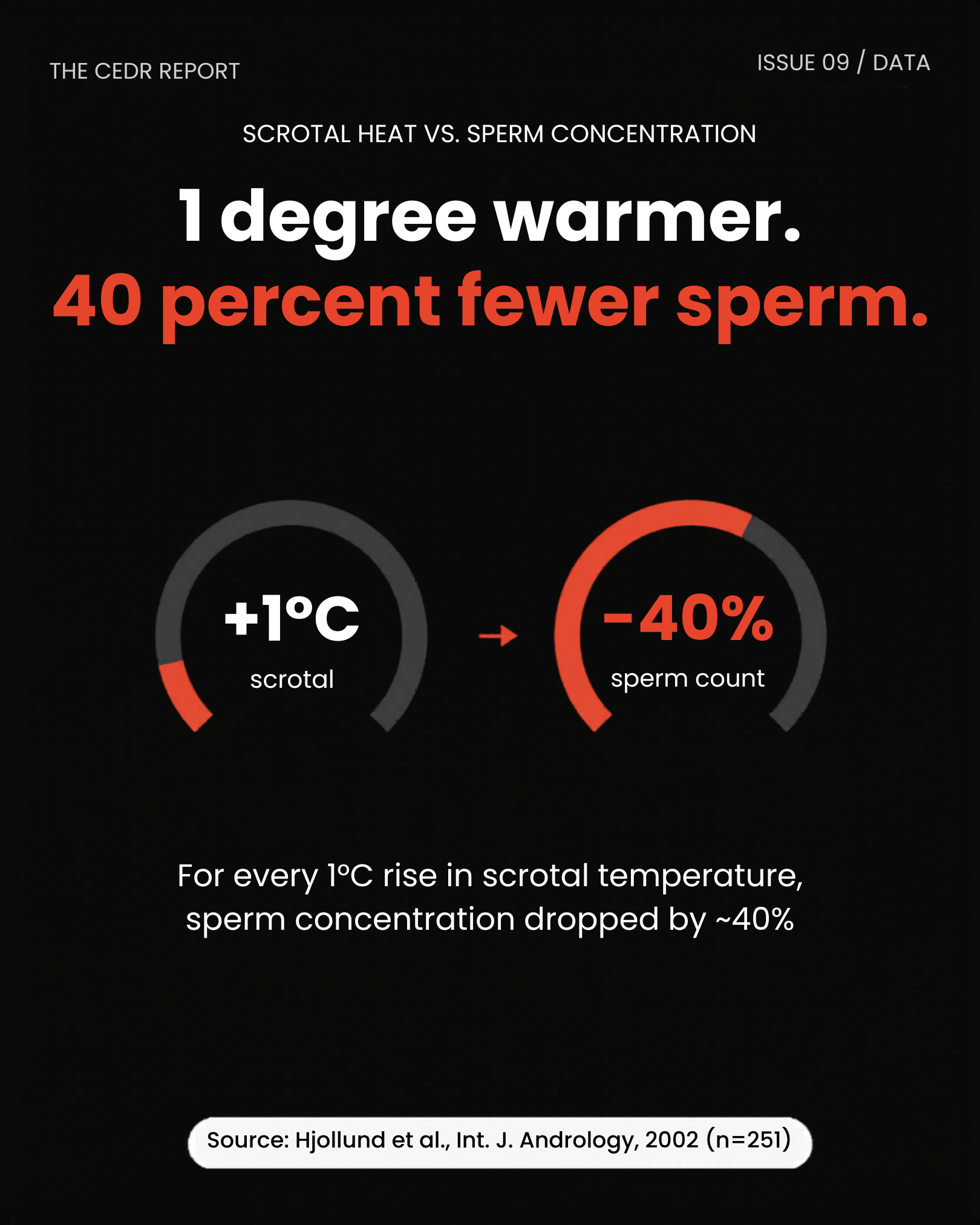
Polyester adds 1 degree of heat. Sperm count drops 40 percent. The fabric on your skin runs the thermostat

The human scrotum is suspended outside the body for a reason. A 1995 review in the International Journal of Andrology by Mieusset and Bujan, drawing on three decades of physiological data, established the baseline. Normal spermatogenesis requires testicular temperature held 2 to 4 degrees Celsius below core body temperature. The scrotum is an evolved heat regulator. Anything that closes that gap closes the production line.
The numbers are direct. A 2002 study in the International Journal of Andrology by Hjollund and the Danish First Pregnancy Planner Study Team measured diurnal scrotal skin temperature in 251 healthy men and tracked their semen parameters. For every 1 degree Celsius increase in scrotal temperature, sperm concentration dropped by approximately 40 percent. A 2013 study in Fertility and Sterility by Garolla et al. induced a sustained 1 degree increase in healthy volunteers and tracked semen parameters across 90 days. Sperm concentration fell substantially and remained suppressed for the duration of the study. Mieusset and colleagues had confirmed the underlying mechanism in 1987 - mild scrotal hyperthermia inhibits germ cell development at multiple stages of meiosis.
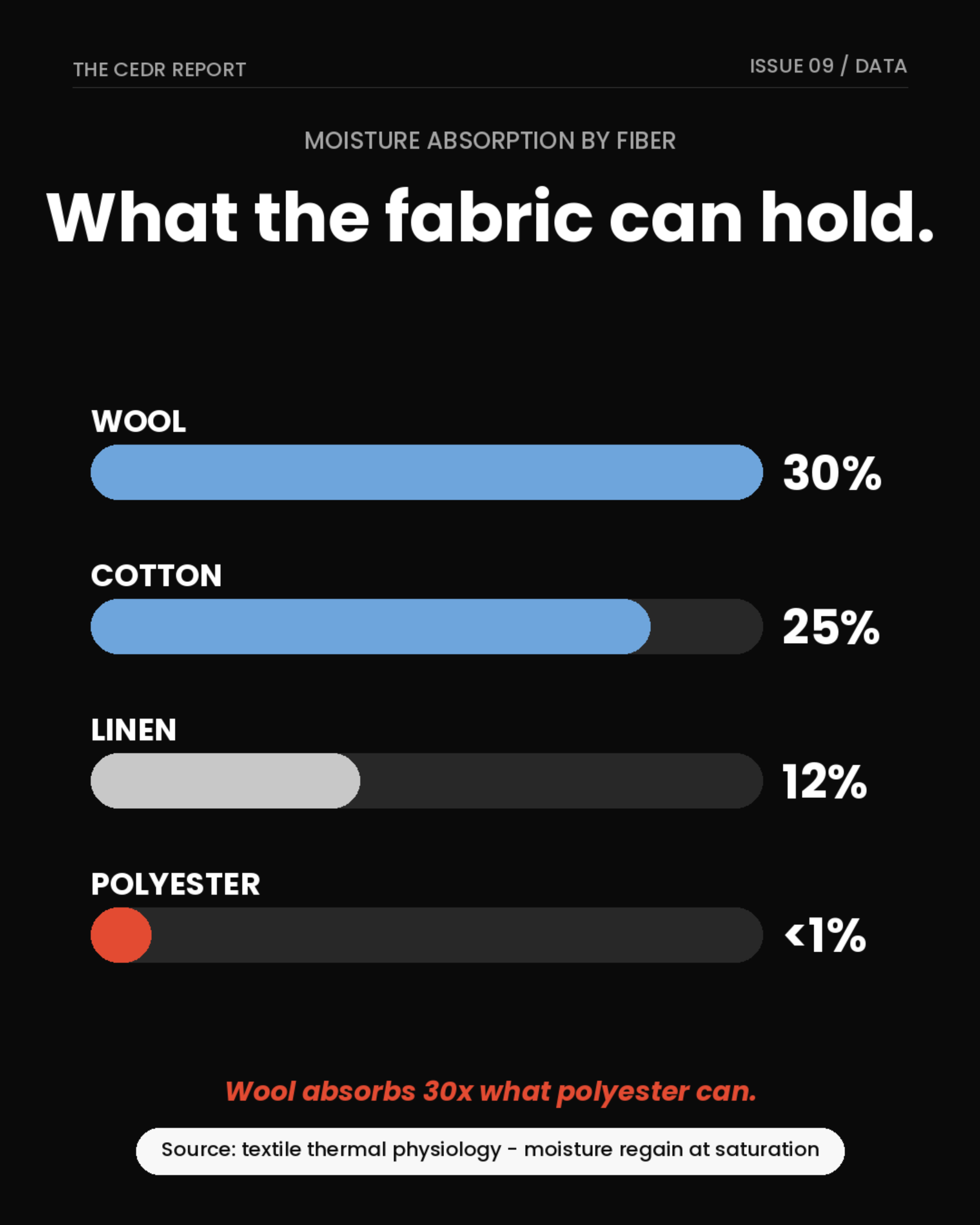
The fabric in contact with skin is the closest thermoregulator a man wears. Wool can absorb up to 30 percent of its weight in moisture vapor before feeling damp. Polyester maxes out below 1 percent. Cotton can absorb roughly 25 percent and releases it as the surface dries. Linen is one of the most thermally conductive woven fibers tested - it draws heat away from the body roughly twice as fast as polyester. Mulberry silk's hygroscopic structure releases moisture at the body's exact rate. Synthetic underwear holds heat and trapped vapor against the scrotum continuously. Natural underwear does not.
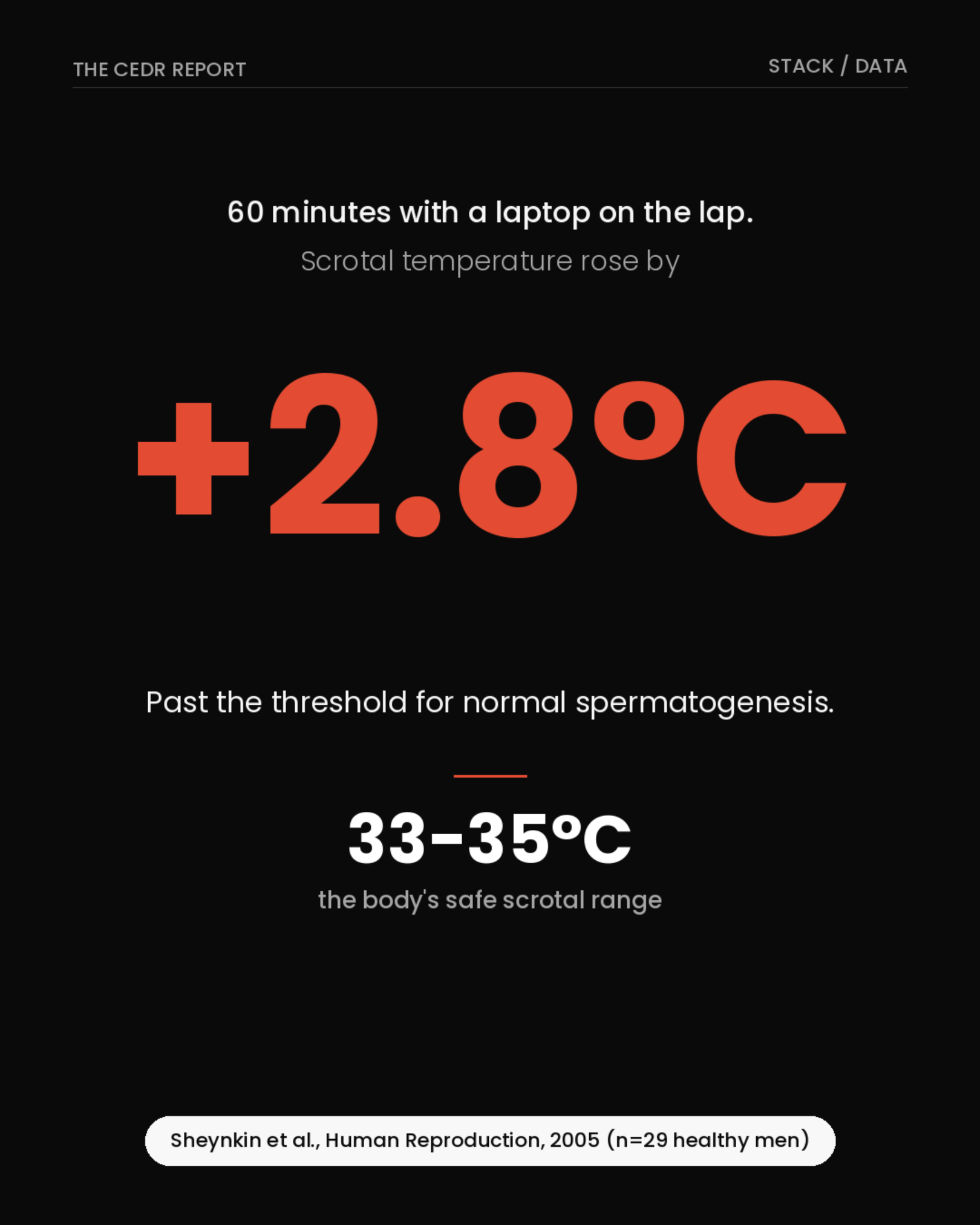
Real-world heat exposure data confirms the load. A 2000 study in the International Journal of Andrology by Bujan et al. measured scrotal temperature in 28 healthy men across a normal workday. Sustained increases of 1.5 to 2.2 degrees Celsius were recorded during sedentary work hours. Tighter clothing, higher ambient temperature, and prolonged sitting all compounded the effect. The temperature gap that spermatogenesis depends on closes in routine daily situations. The fabric layer either resists the heat or accelerates it.
A 2007 review in Andrologia by Jung and Schuppe pulled together three decades of human heat-exposure literature. The pattern was consistent. Scrotal warming reduces sperm concentration, motility, and morphology, and the effect is dose-dependent on degree and duration. A 1997 study in the Journal of Clinical Endocrinology and Metabolism by Wang and colleagues showed that a single 30-minute hot bath at 43 degrees Celsius produced a measurable drop in sperm concentration that took weeks to recover. The reproductive system has a thermal ceiling. Modern synthetic fabric raises the floor.
The fiber against the skin is the variable a man controls every morning. The body is built to run a few degrees cooler at the source. Spermatogenesis depends on it. Hormone profiles respond to it. Cotton, merino wool, mulberry silk, and linen are not aesthetic preferences - they are the fabrics that hold the temperature gap that polyester closes. The scrotum did not evolve outside the body by accident. The fabric on top of it is either honoring that design or fighting it.



One email/blog, every Friday. Subscribe below.