
35% of ocean microplastics come from washing synthetic clothes. The cycle ends in your body
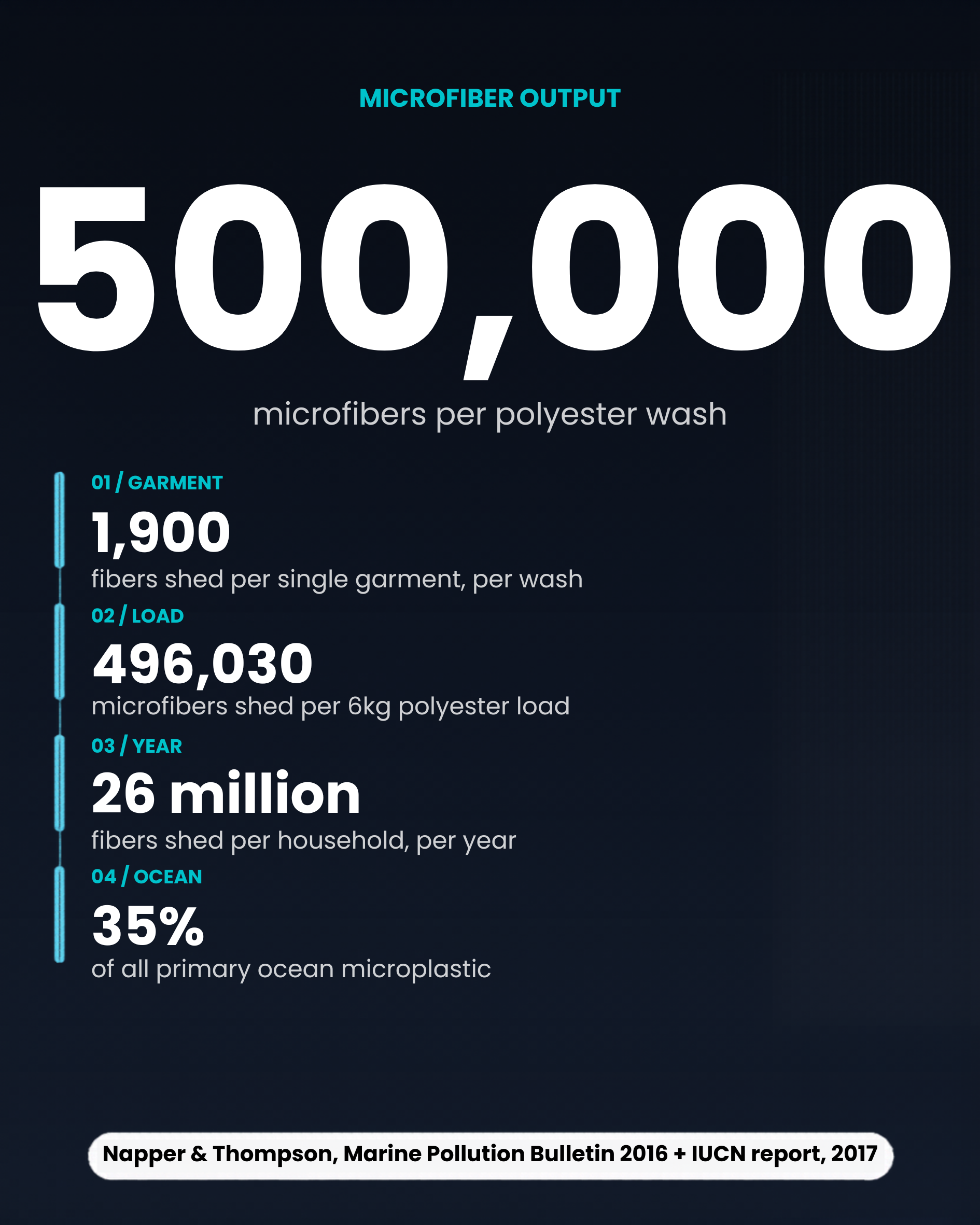
A 2017 IUCN report identified the largest source of primary microplastic pollution entering the world's oceans. Not tire dust. Not industrial pellets. Not paint. Synthetic clothing washed in household machines accounts for 35 percent of all primary microplastics in the marine environment. The number-one source on the planet sits inside the laundry room.
The mechanism is mechanical. A 2016 study in Marine Pollution Bulletin by Napper and Thompson at Plymouth University ran a controlled experiment on three garment types in a standard washing machine. A single 6-kilogram polyester load released approximately 496,030 microfibers per cycle. A 6-kilogram acrylic load released 728,789. The fibers measured under one millimeter. Wastewater filtration cannot capture them. Treatment plants release them. The household washing machine functions as a continuous outflow of synthetic microplastic.
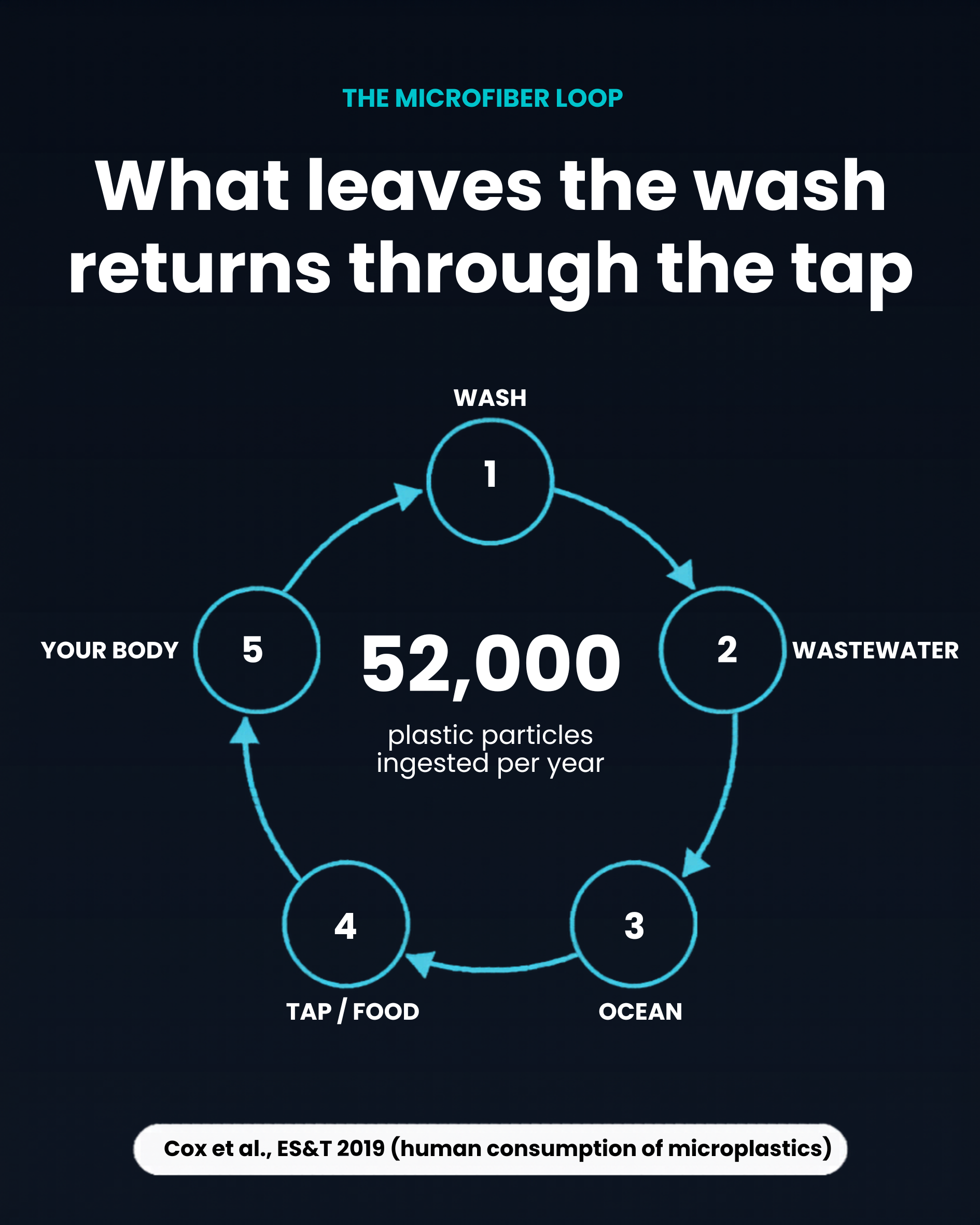
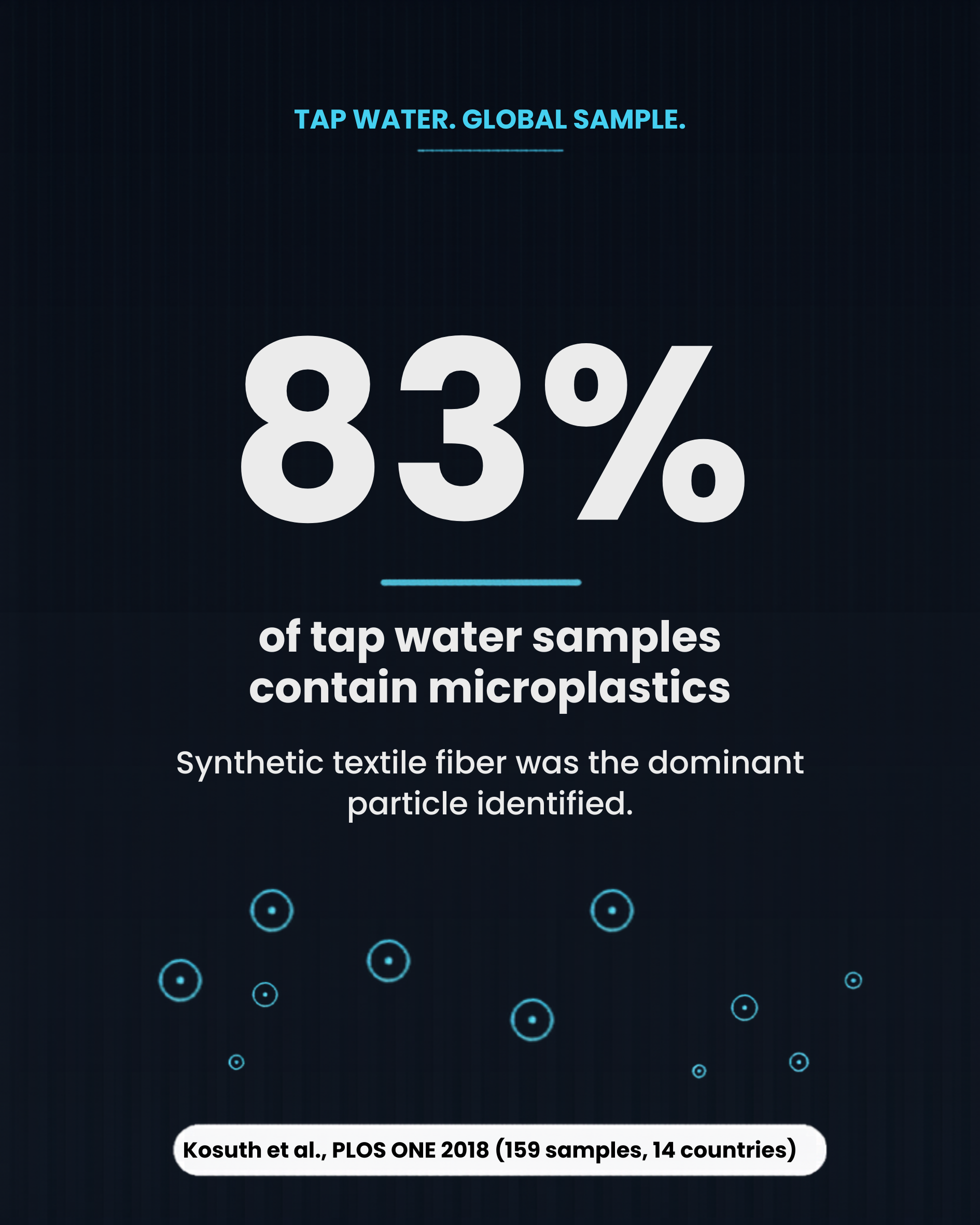
The fibers do not stay in the ocean. A 2019 study in Environmental Science & Technology, "Human Consumption of Microplastics," estimated the average adult ingests 39,000 to 52,000 plastic particles per year, with drinking water identified as the dominant source. A 2022 study in Environment International by Leslie and colleagues at Vrije Universiteit Amsterdam was the first to detect plastic particles in human blood - found in 17 of 22 healthy donors tested. A companion 2022 paper in Science of the Total Environment identified microplastic fibers in 11 of 13 surgical lung tissue samples, including in the deepest lobes. What leaves the wash returns through the tap, and the tap is not the last stop.
The microfibers carry chemistry with them. A 2014 study in Environmental Science & Technology by Schreder and La Guardia documented perfluorinated stain-resistant compounds and brominated flame retardants leaching from textiles during normal household washing. A 2018 study in Chemosphere identified phthalates and antimony - both endocrine disruptors - in synthetic-textile laundry effluent. The microfiber is not an inert particle. It is a delivery system. Every load multiplies the exposure.
Cotton, merino wool, linen, and silk also shed during washing. The difference is what happens after. Natural fibers biodegrade. They break down in soil, in fresh water, and in seawater within months. Polyester does not. Synthetic microfibers are still detectable in marine sediment more than 60 years after manufacture. Every wash of every polyester garment adds to a load that does not leave.
The body is downstream of the laundry room. Wearing synthetic clothing delivers the chemistry through the skin. Washing it delivers the same chemistry through everyone else's drinking water - and then back to you. The single decision that disrupts the cycle is fiber. The fiber you wear is the fiber you wash. Cotton, merino, mulberry silk, and linen do not contribute to the 35 percent. They do not survive a century in seawater. They do not load the tap with the same chemistry they carried against your skin. Your laundry hamper is a daily vote.



One email/blog, every Friday. Subscribe below.