
A 2013 study linked forever chemicals to testicular cancer. Your performance underwear is treated with them
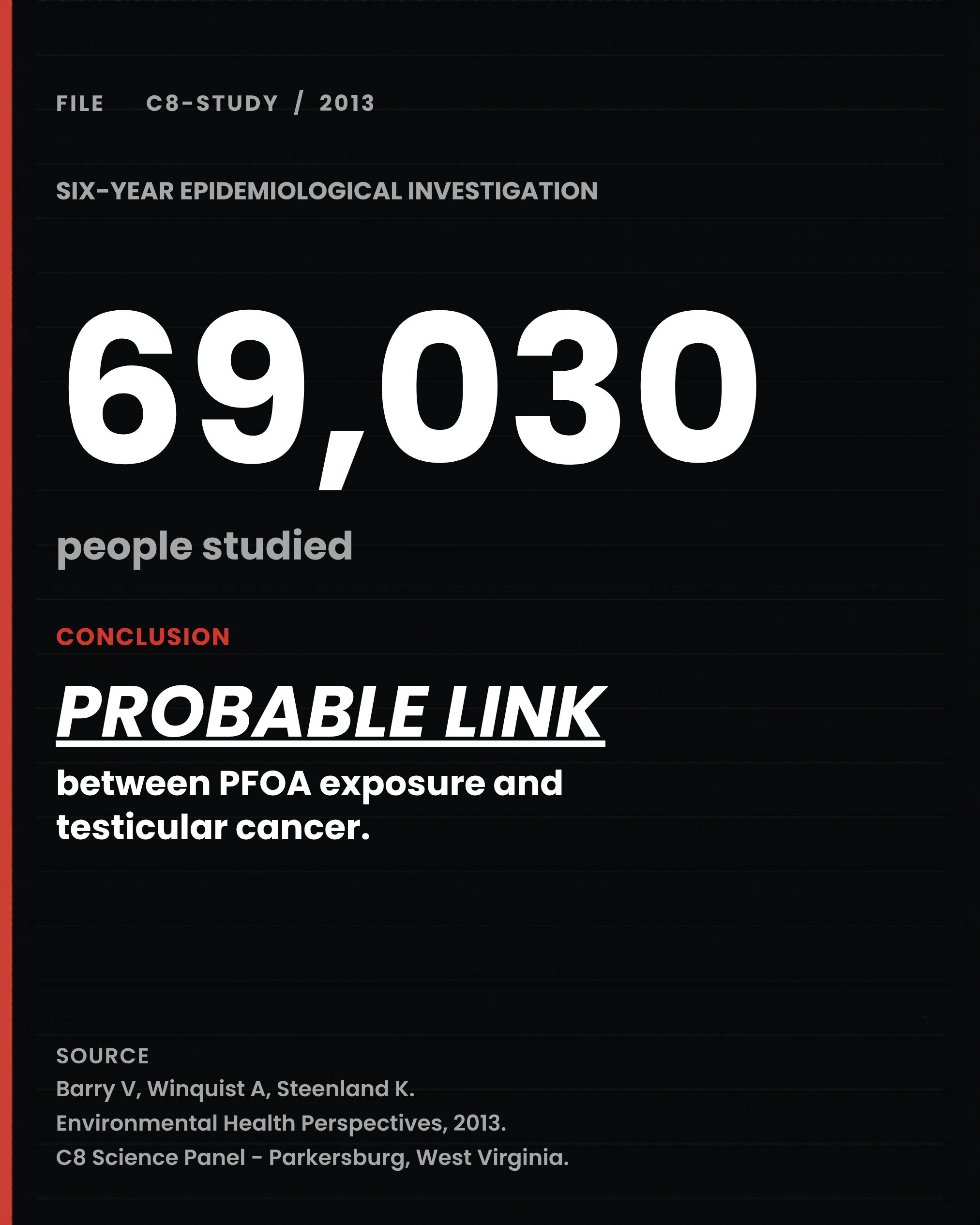
In 2013, the C8 Science Panel completed one of the largest epidemiological investigations in American history. 69,030 people living near a DuPont plant in West Virginia had been drinking water contaminated with perfluorooctanoic acid - PFOA - for decades. After six years of independent analysis, the panel published its conclusion in Environmental Health Perspectives. There is a "probable link" between PFOA exposure and testicular cancer.
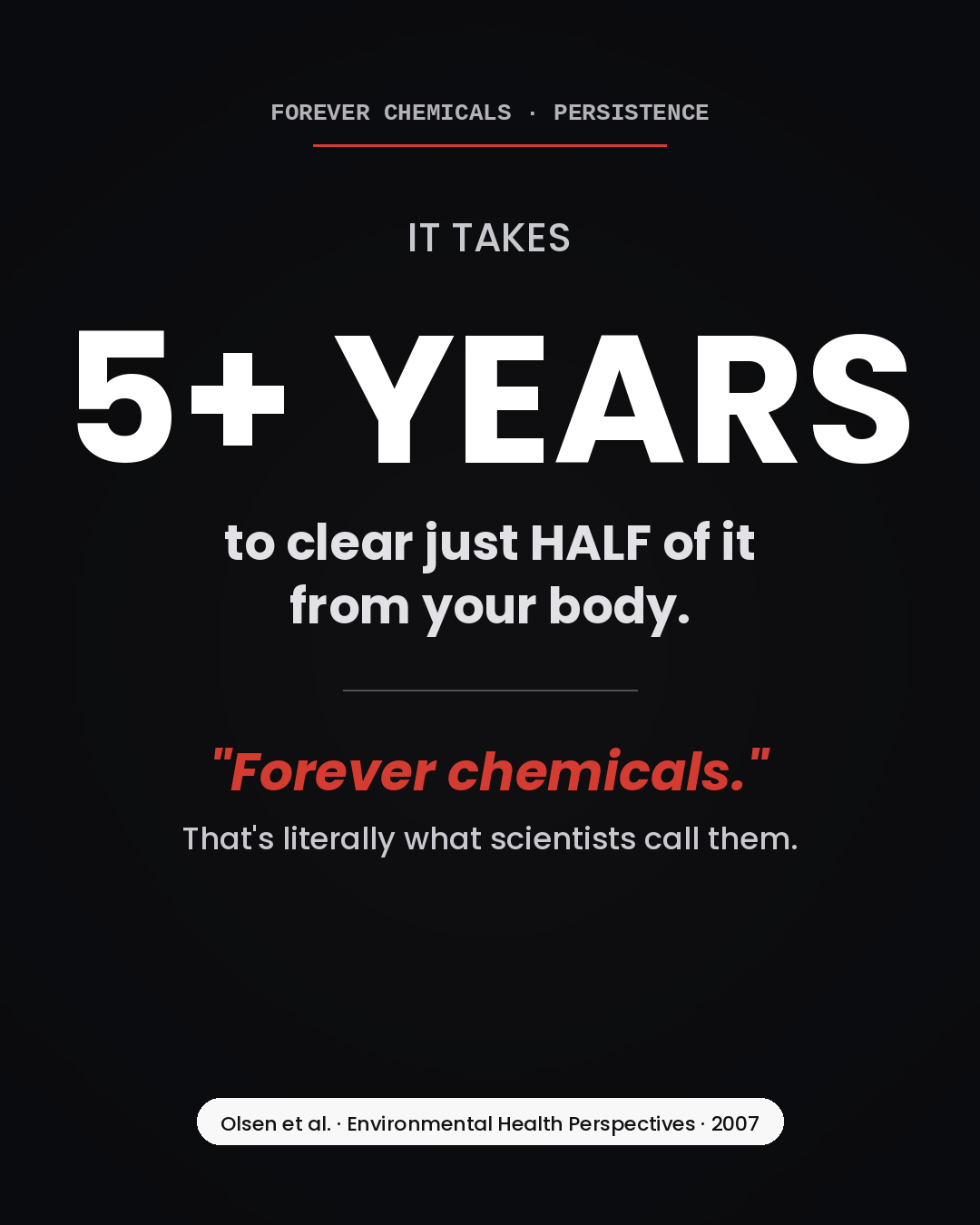
PFOA belongs to a family of synthetic compounds called PFAS - per- and polyfluoroalkyl substances. They do not biodegrade. The carbon-fluorine bond that makes them water-, oil-, and stain-resistant is the strongest single bond in organic chemistry. Once they enter the human body, they accumulate. The half-life of PFOS in human blood is 5.4 years. This is why they are called forever chemicals.
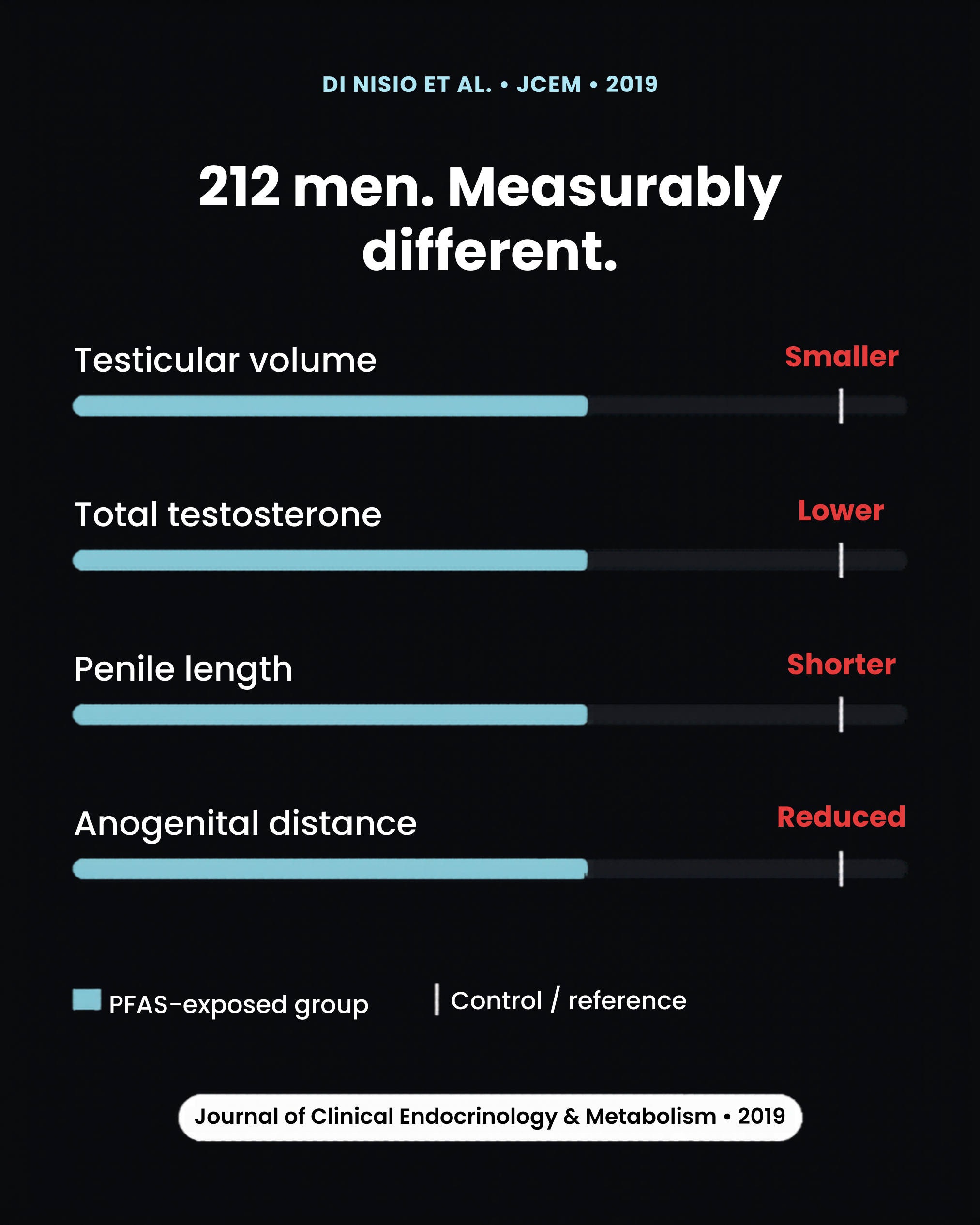
The 2013 finding established the cancer endpoint. The mechanism came next. In 2019, researchers at the University of Padova published findings in the Journal of Clinical Endocrinology & Metabolism from a controlled study of 212 young men aged 18 to 22. Half had grown up in the Veneto region of Italy drinking water contaminated with PFAS from a local manufacturing plant. The other half lived just outside the exposure zone.
The exposed group had measurably smaller testicular volume, lower total testosterone, shorter penile length, and reduced anogenital distance - a marker of androgen exposure set during fetal development and reinforced through puberty. The higher the PFAS level in the blood, the greater the deviation from normal male hormonal anatomy. The laboratory work identified why. PFOA binds directly to the human androgen receptor - the same receptor testosterone uses to signal every target tissue in the male body. Once PFOA occupies the site, the receptor cannot read testosterone. The signal is blocked. Spermatogenesis, masculinization, libido, muscle, and mood are all downstream of that receptor.
The exposure route is fabric. A 2022 study in Environmental Science & Technology tested 72 school uniforms from nine countries. 65 of 72 stain-resistant items contained measurable PFAS. Peer-reviewed testing has identified the same fluorochemical finishes in adult apparel - moisture-wicking boxers, stain-resistant briefs, water-repellent athletic shorts. A companion study in Chemosphere demonstrated that these compounds migrate from treated fabric during normal wear. Sweat, friction, and body heat accelerate the release. These are the exact conditions present against scrotal skin for 16 or more hours a day.
Forever chemicals were designed never to fail, never to degrade, never to leave. That is what makes them useful in a stain-resistant finish. It is also what makes them dangerous inside a human body. The 2013 data established the cancer link. The 2019 data identified the endocrine mechanism. The 2022 data traced the exposure route. The one decision still in your hands is what you choose to put against your skin tomorrow morning.



One email/blog, every Friday. Subscribe below.