
Your underwear sheds plastic every time you move. Washing is the least of it

A study published in Environmental Science & Technology tested how many microplastic fibers synthetic clothing releases during normal daily wear - not in the wash, but on your body. Researchers had volunteers wear polyester garments and perform everyday movements in a controlled lab environment. In just 20 minutes of regular activity, the fabrics shed up to 400 plastic fibers per gram of material.
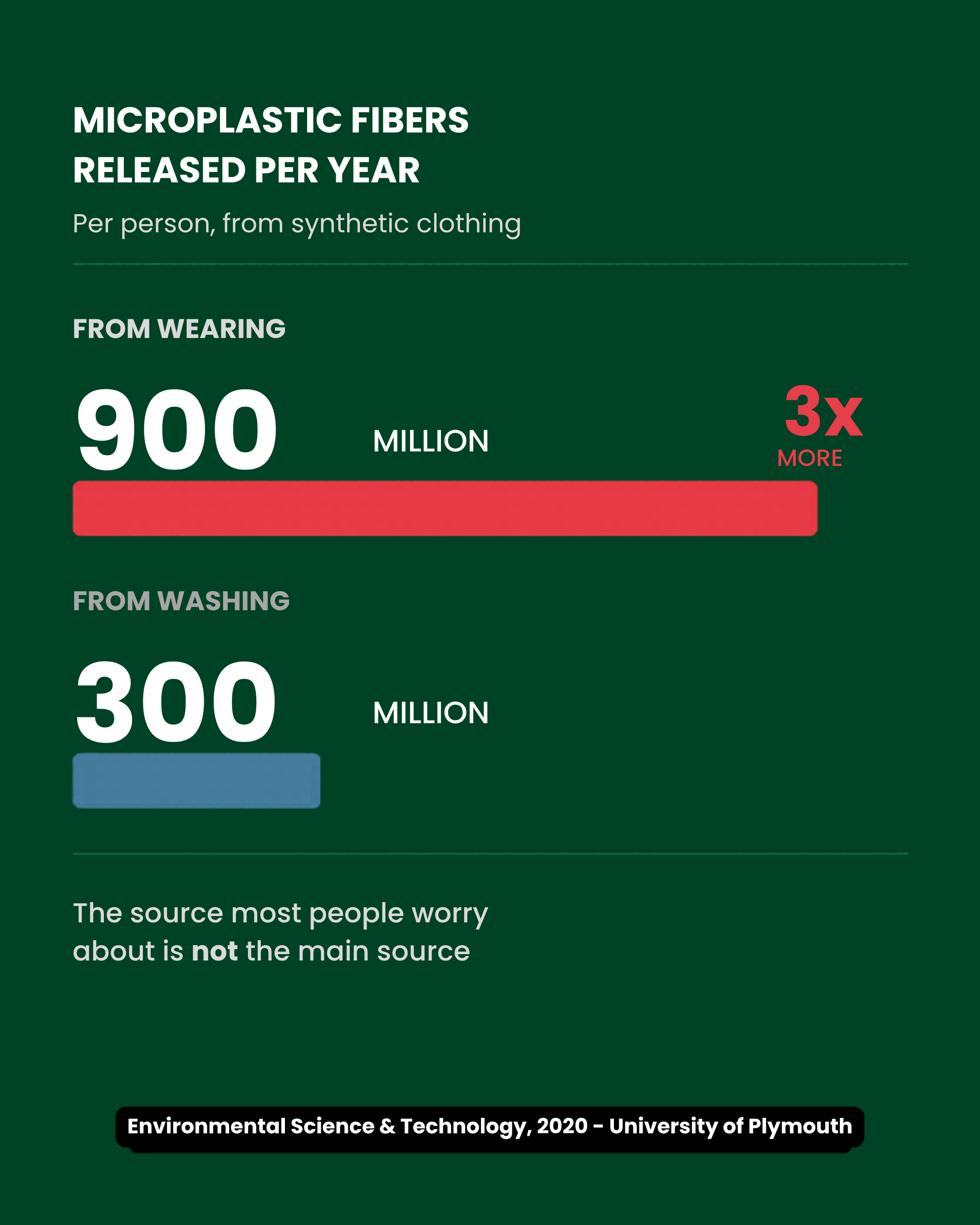
Scaled to a full year, the results were stark. One person wearing synthetic clothing releases approximately 900 million polyester microfibers annually - just from wearing. Washing those same garments releases roughly 300 million. Wearing sheds three times more plastic than washing. The source most people worry about is not the main source at all.
For underwear, the exposure is direct. Every pair of polyester, nylon, or spandex underwear pressed against your body sheds fibers through friction - with every step, every shift in your seat, every movement throughout the day. And the skin receiving those fibers is scrotal skin, which absorbs chemicals at 42 times the rate of your forearm. This is not ambient environmental exposure. This is contact-level, continuous, fiber-to-skin delivery for 16 or more hours a day.
A 2024 study published in eBioMedicine - a Lancet journal - quantified what that accumulation does. Researchers analyzed semen and urine from 113 men across three regions in China and detected microplastics in every single sample. The most common polymers - polystyrene, polypropylene, polyethylene - are the same plastics found in synthetic clothing and underwear.
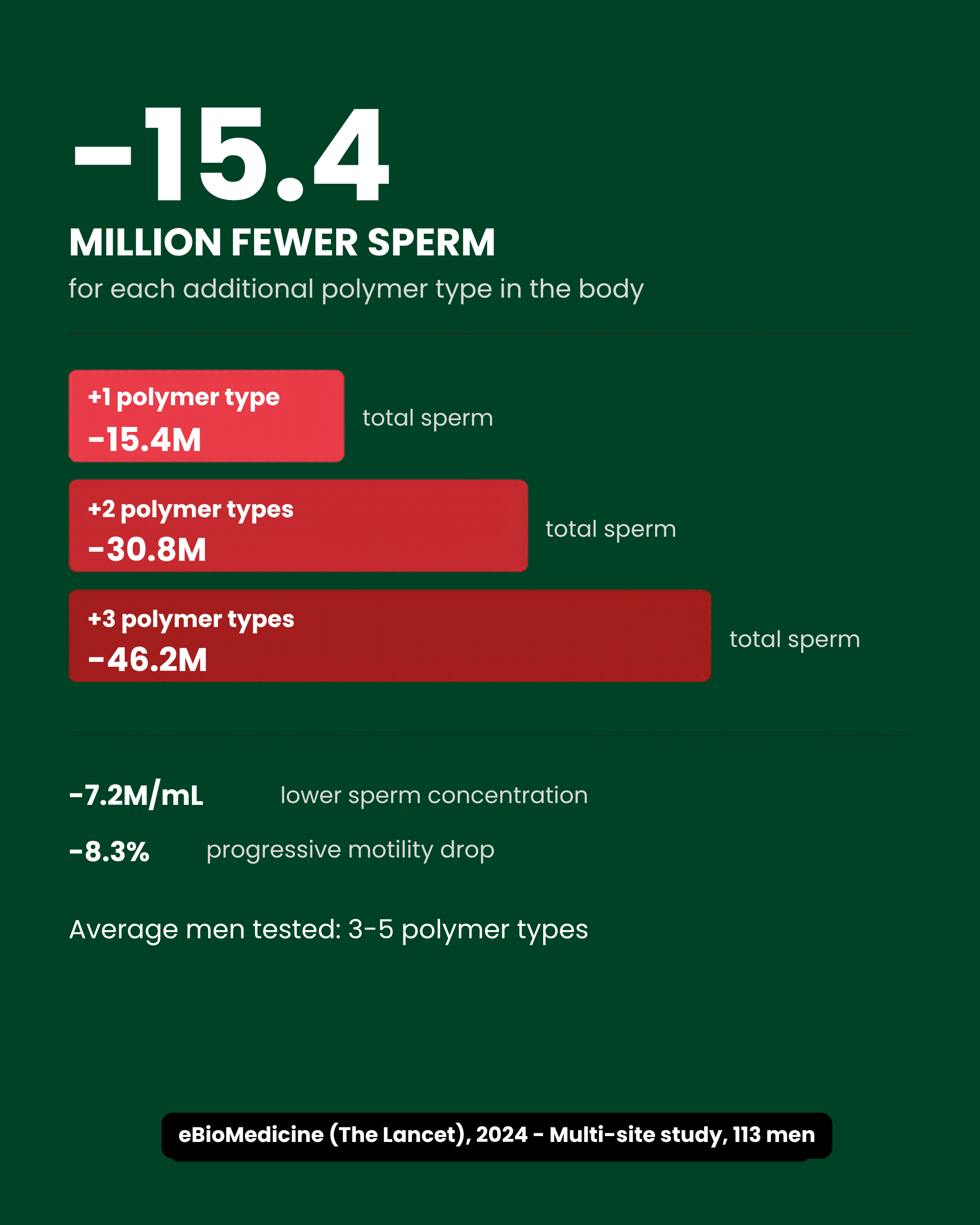
The critical finding was the dose-response relationship. Each additional type of microplastic found in a man's body was associated with 15.4 million fewer total sperm, 7.2 million per milliliter lower concentration, and an 8.3 percentage point drop in progressive motility. The more types of plastic present, the worse the damage. The men in this study carried an average of 3 to 5 different polymer types.
The chain is now measurable. Synthetic fabric sheds plastic with every movement. Those fibers reach the most absorptive skin on the male body. The chemicals they carry enter the bloodstream. And the reproductive damage scales directly with the number of plastics your body accumulates. Every layer of synthetic fabric you remove from the equation reduces the dose. The one layer closest to your body is the one that matters most.





One email/blog, every Friday. Subscribe below.