
The most protected barrier in the male body has been breached

Deep inside the male reproductive system sits one of the tightest biological barriers in the human body. The blood-testis barrier separates the bloodstream from developing sperm cells - blocking toxins, pathogens, and foreign particles from reaching the place where sperm are made. It is comparable in strength to the blood-brain barrier. It exists for one reason: to protect the next generation.
A study published in ACS Nano in January 2025 by researchers at Peking University showed that microplastics breach this barrier. After ingestion, polylactic acid microplastics degraded into nanoparticles small enough to pass through the blood-testis barrier and accumulate directly inside the spermatogenic microenvironment - the area where sperm cells develop and mature.
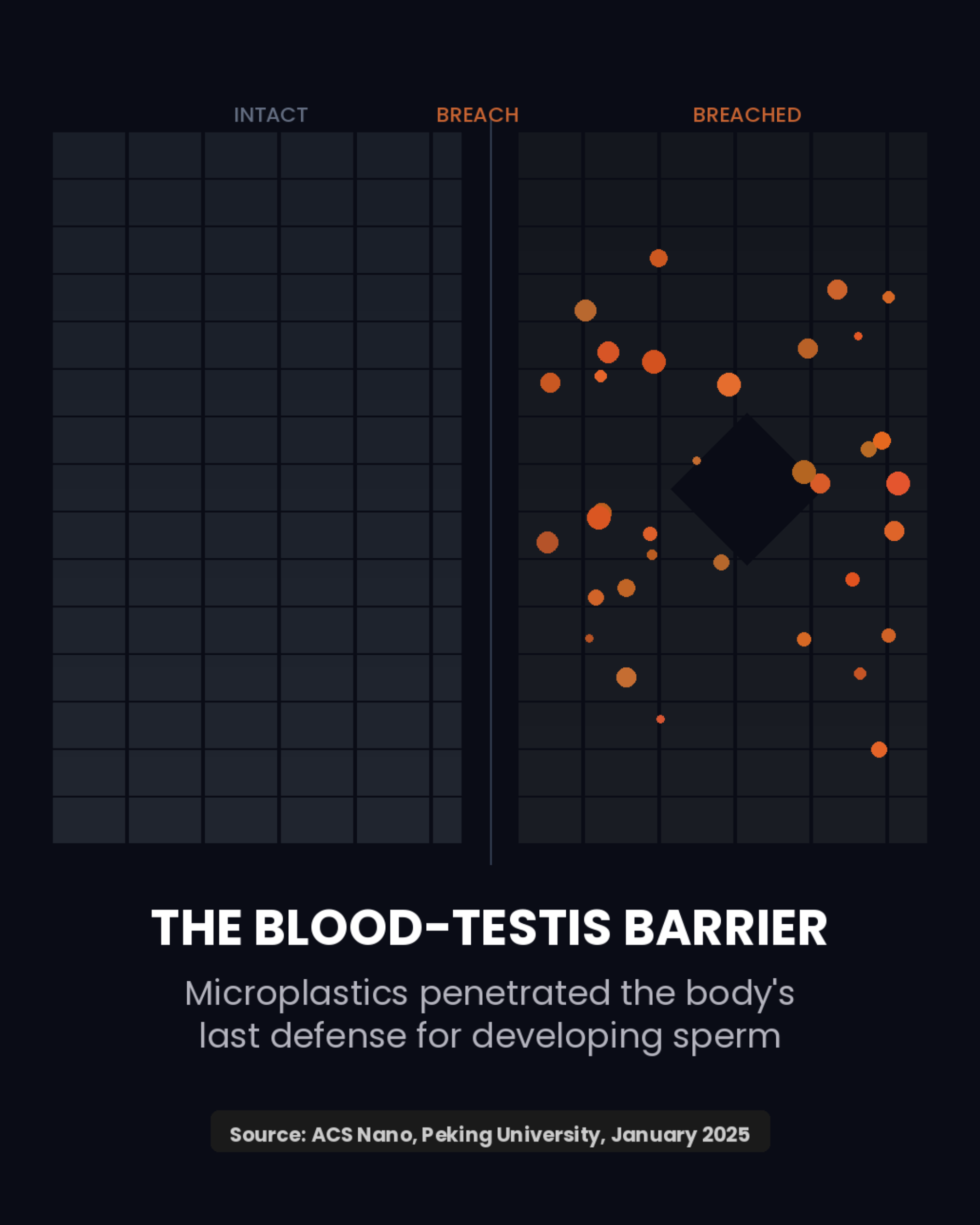
Once inside, the damage was specific and severe. The nanoparticles embedded themselves in the mitochondrial sheath of sperm - the structure that produces the energy sperm need to swim. Mitochondrial function declined in a dose-dependent manner. Sperm concentration dropped. Motility dropped. Deformity rates climbed. Sex hormone levels shifted. The barrier designed to prevent exactly this had failed.
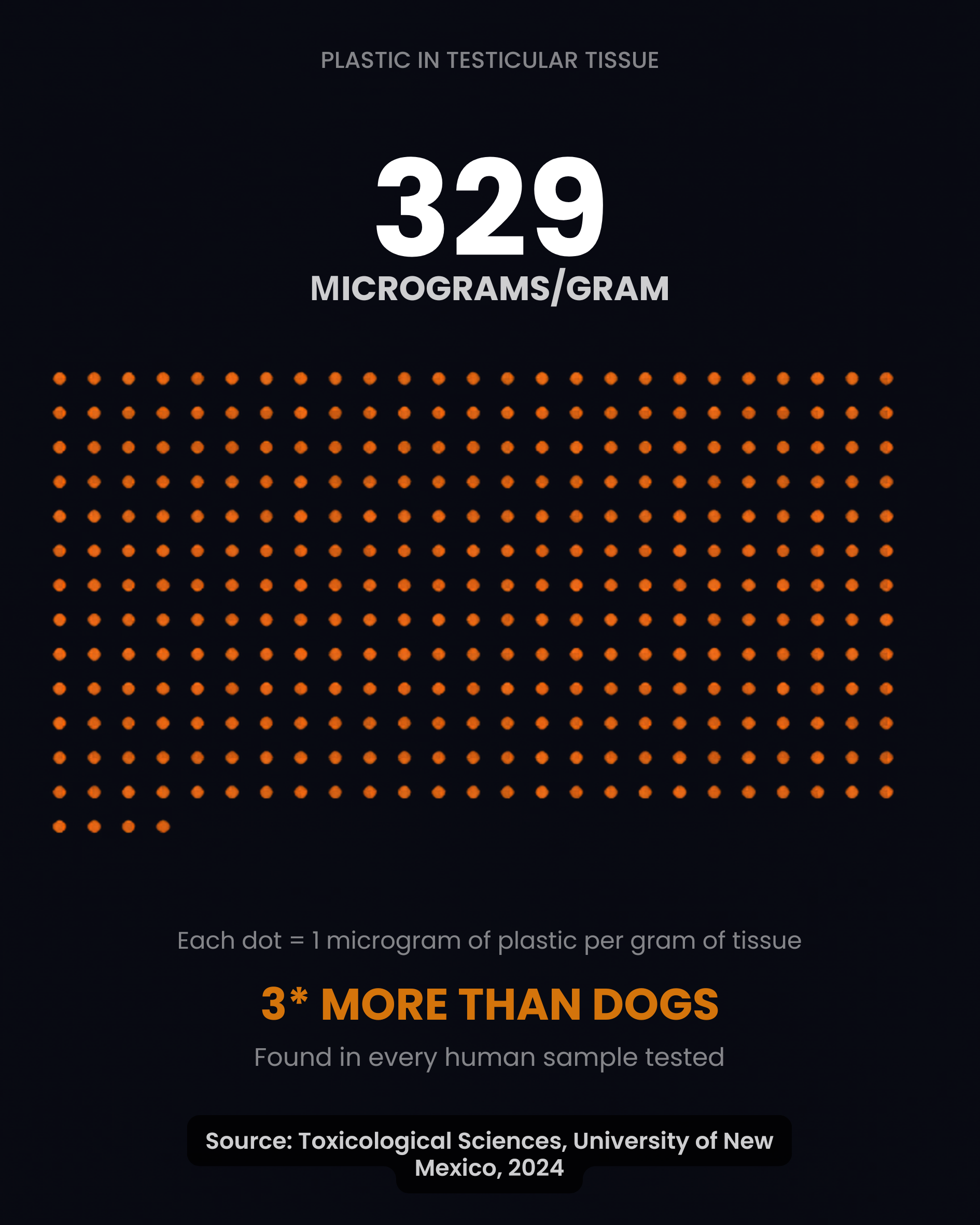
A 2024 study from the University of New Mexico confirmed the real-world scale. Researchers analyzed testicular tissue from 23 men and found microplastics in every single sample. The average concentration: 329 micrograms of plastic per gram of testicle - nearly three times the concentration found in dogs tested the same way. Twelve different polymer types were identified, including polyethylene, the same plastic used in synthetic fabrics.
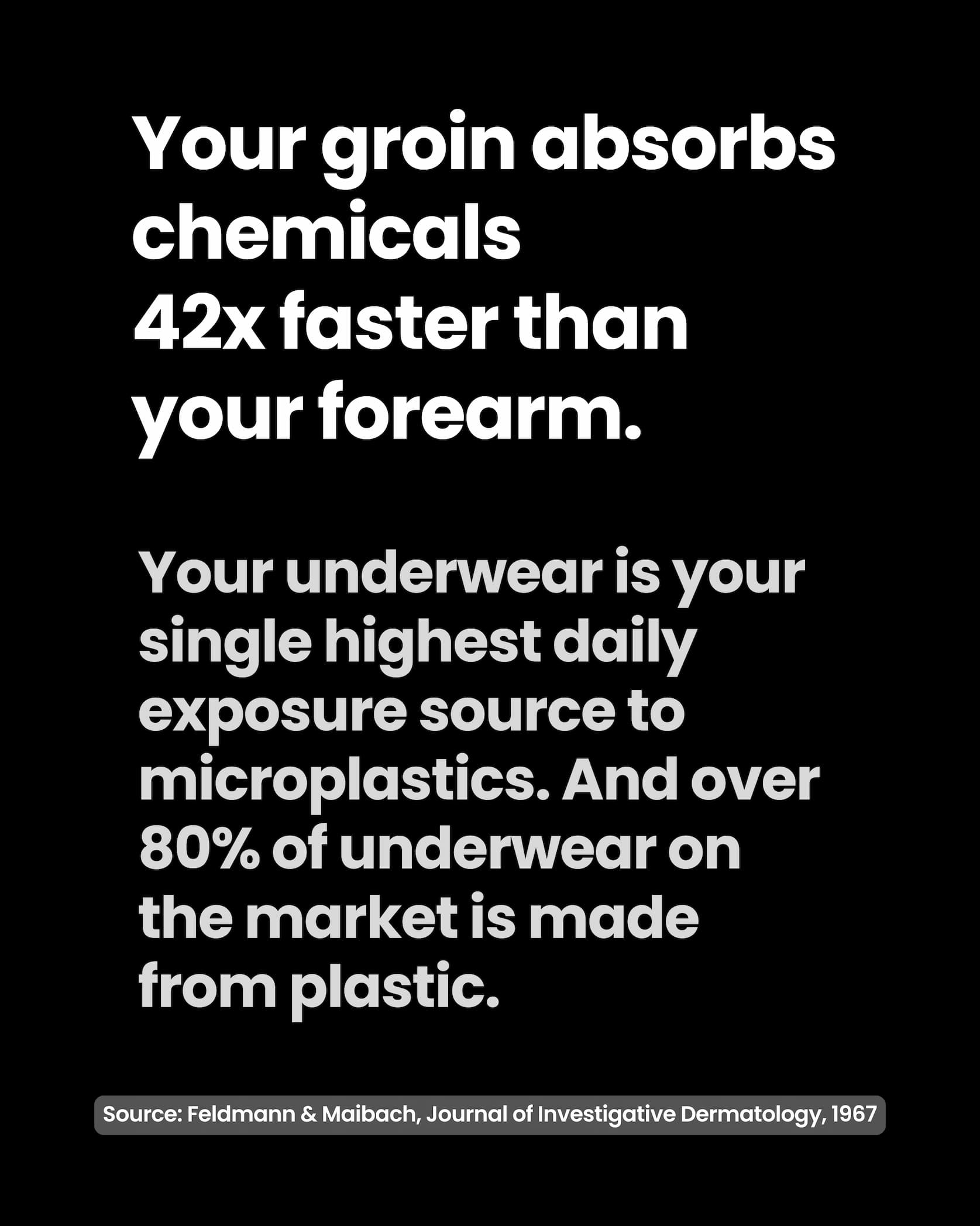
The route of exposure matters. Scrotal skin is the most permeable skin on the male body - chemicals and particles placed on the scrotum absorb at rates far exceeding any other body site. Synthetic underwear puts polyester, nylon, and spandex directly against this tissue for 16 or more hours a day. These fabrics shed microplastic fibers continuously with every movement. And as the 2025 study demonstrates, once those particles enter the bloodstream, even the body's strongest reproductive barrier cannot stop them.
Your body built this wall over millions of years of evolution. It is one of the most specialized protective structures in human biology. The question is no longer whether microplastics can reach your sperm - the 2024 data proves they already have. The question is what you put against your skin every day to keep adding more.




One email/blog, every Friday. Subscribe below.