
Your sweat pulls chemicals from synthetic fabric directly into your blood

A study published in Environment International in 2024 provided the first experimental evidence of something researchers had long suspected but never directly measured. Chemicals embedded in synthetic microplastics - the same fibers shed by polyester, nylon, and spandex clothing - can leach into human sweat and absorb through the skin into the bloodstream.
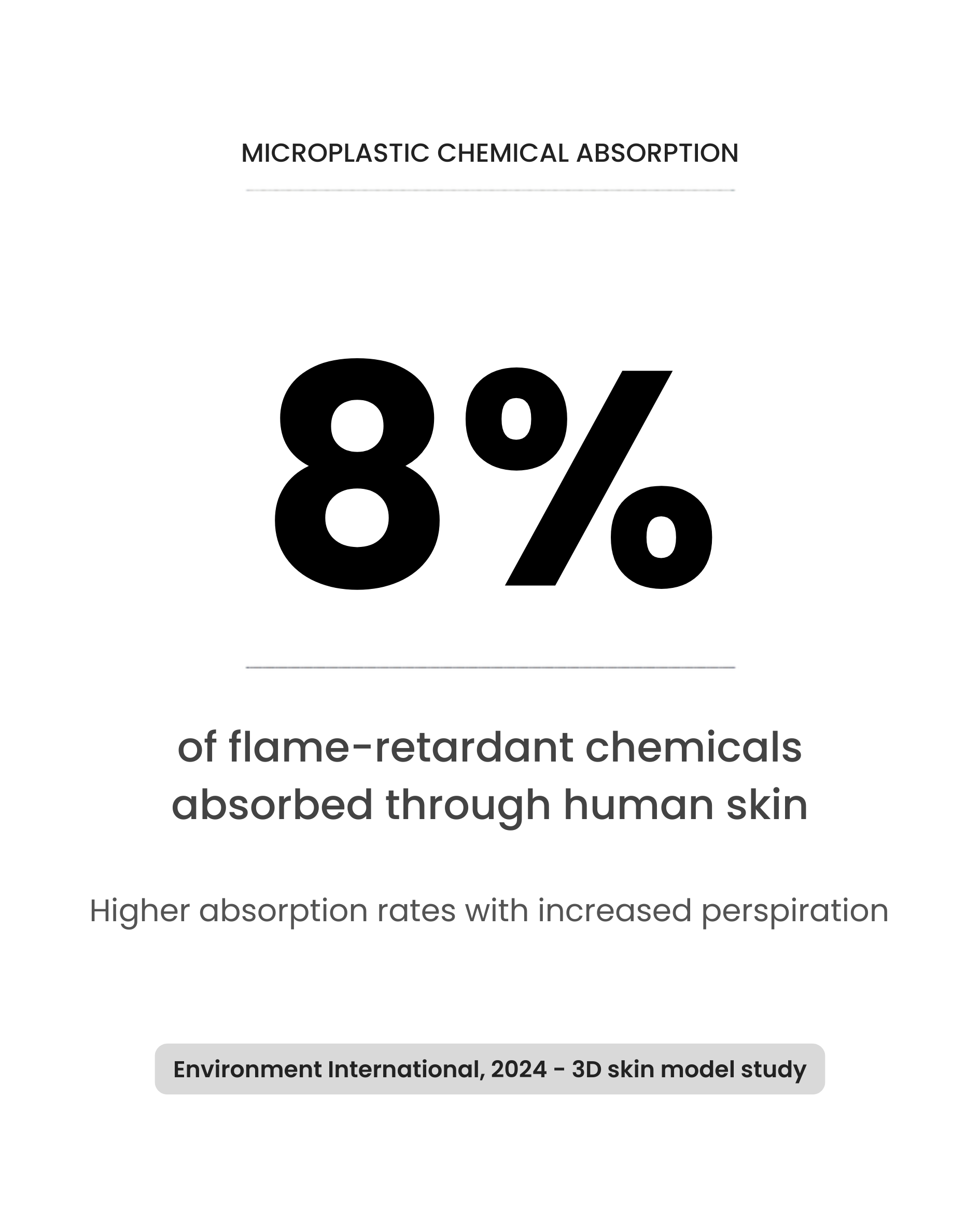
The research team at the University of Birmingham used 3D human skin models to simulate real-world exposure over 24 hours. They found that up to 8% of the flame-retardant chemicals present in common microplastics were absorbed through the skin. Sweatier skin absorbed significantly more. This is not theoretical exposure. It is measured, dose-dependent absorption.
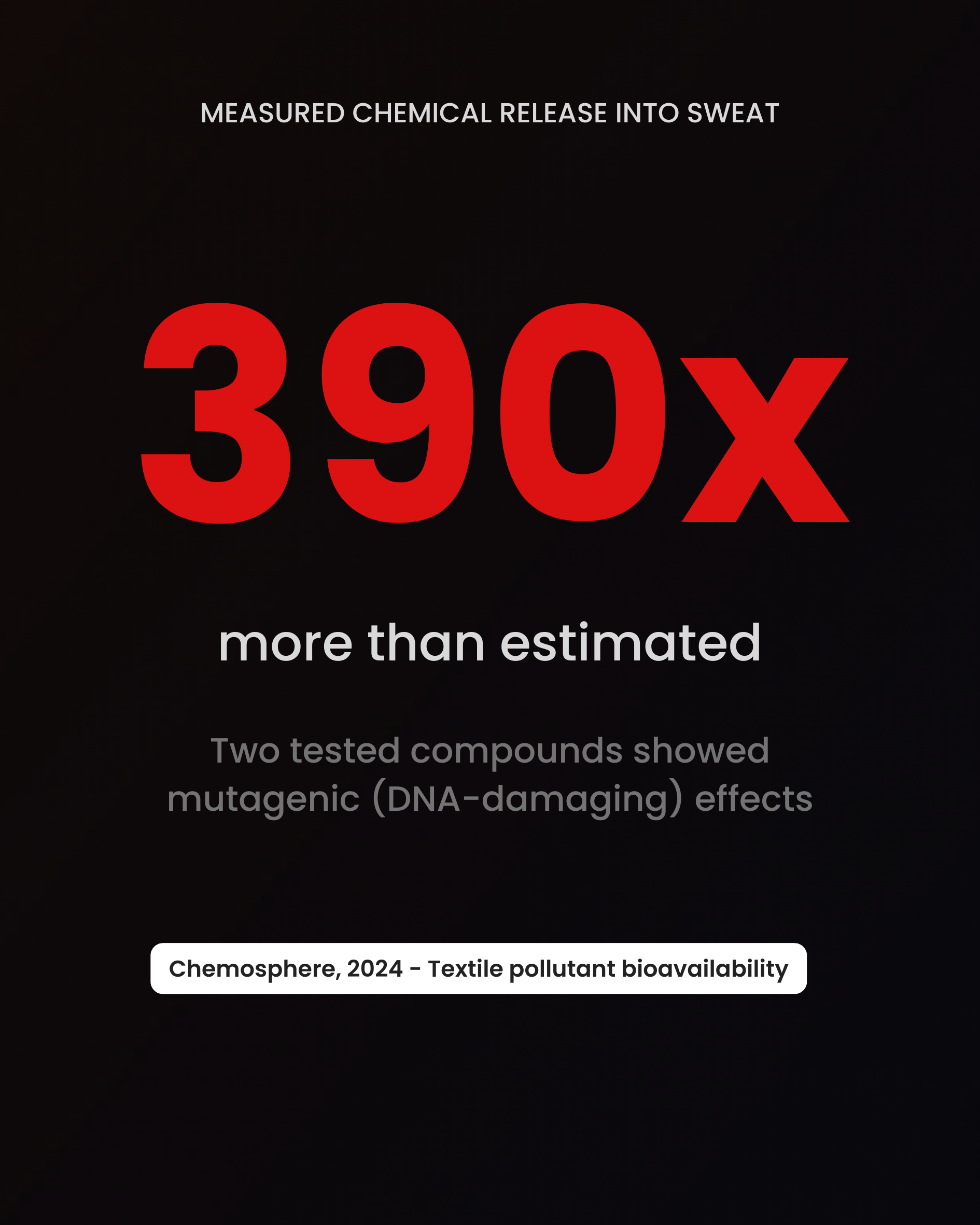
A separate 2024 study published in Chemosphere tested how fast hazardous chemicals actually migrate from textile fibers into sweat. The result: up to 390 times higher than previous estimates in the scientific literature. Two of the compounds tested also showed mutagenic effects - meaning they are capable of damaging your DNA.
The location matters. Scrotal skin is the most permeable skin on the male body. Classic permeability research found it absorbs chemicals at 42 times the rate of the forearm. Medicine already uses this - testosterone replacement therapy applied to scrotal skin requires a fraction of the standard dose because absorption is so efficient. The same mechanism that delivers medication also delivers every chemical your underwear leaches.
Data from the National Health and Nutrition Examination Survey (2013-2016) confirms the downstream effect. Researchers analyzing thousands of American men found that each doubling of DEHP - a phthalate commonly found in synthetic textiles - was associated with a 7.7% reduction in total testosterone. Among younger men aged 20 to 39, phthalate metabolites were linked to even steeper drops in both free and bioavailable testosterone.
The mechanism is now measurable. Synthetic underwear sits against the most absorptive skin on your body. It leaches chemicals into your sweat. Those chemicals absorb through the skin into your blood. And the hormonal consequences are already showing up in population-level data. The only variable you control is what you put against your skin.




One email/blog, every Friday. Subscribe below.