
Half the sperm count in 50 years. And the decline is accelerating

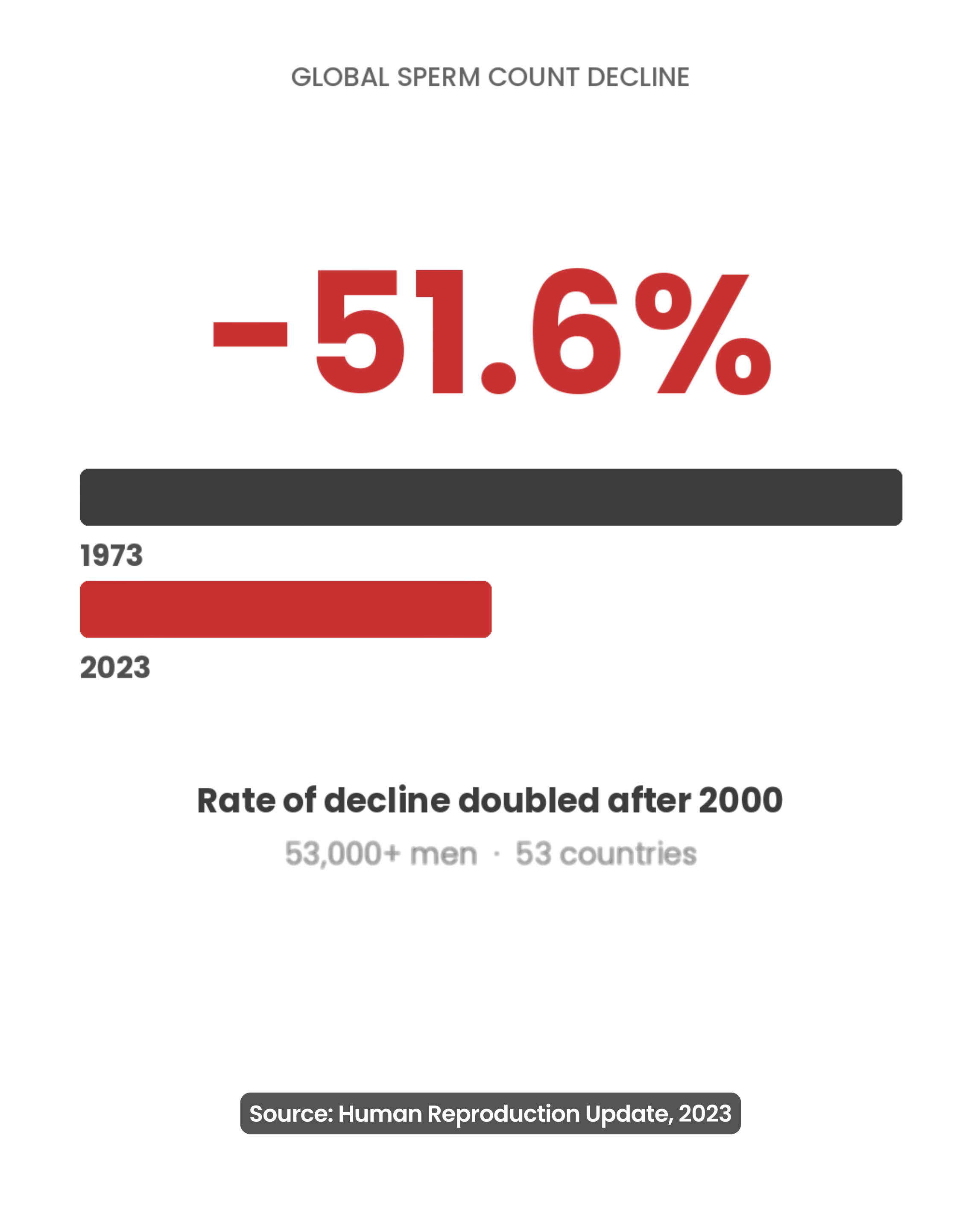
A meta-analysis published in Human Reproduction Update in 2023 analyzed sperm data from more than 53,000 men across 53 countries. The finding: average sperm counts have dropped 51.6% since 1973. Not in a specific region. Not in a specific demographic. Globally.
The rate of decline is not steady. It is accelerating. Between 1973 and 2000, sperm counts dropped at roughly 1.16% per year. After 2000, that rate more than doubled to 2.64% per year. Something changed at the turn of the century - and the decline has not slowed down.
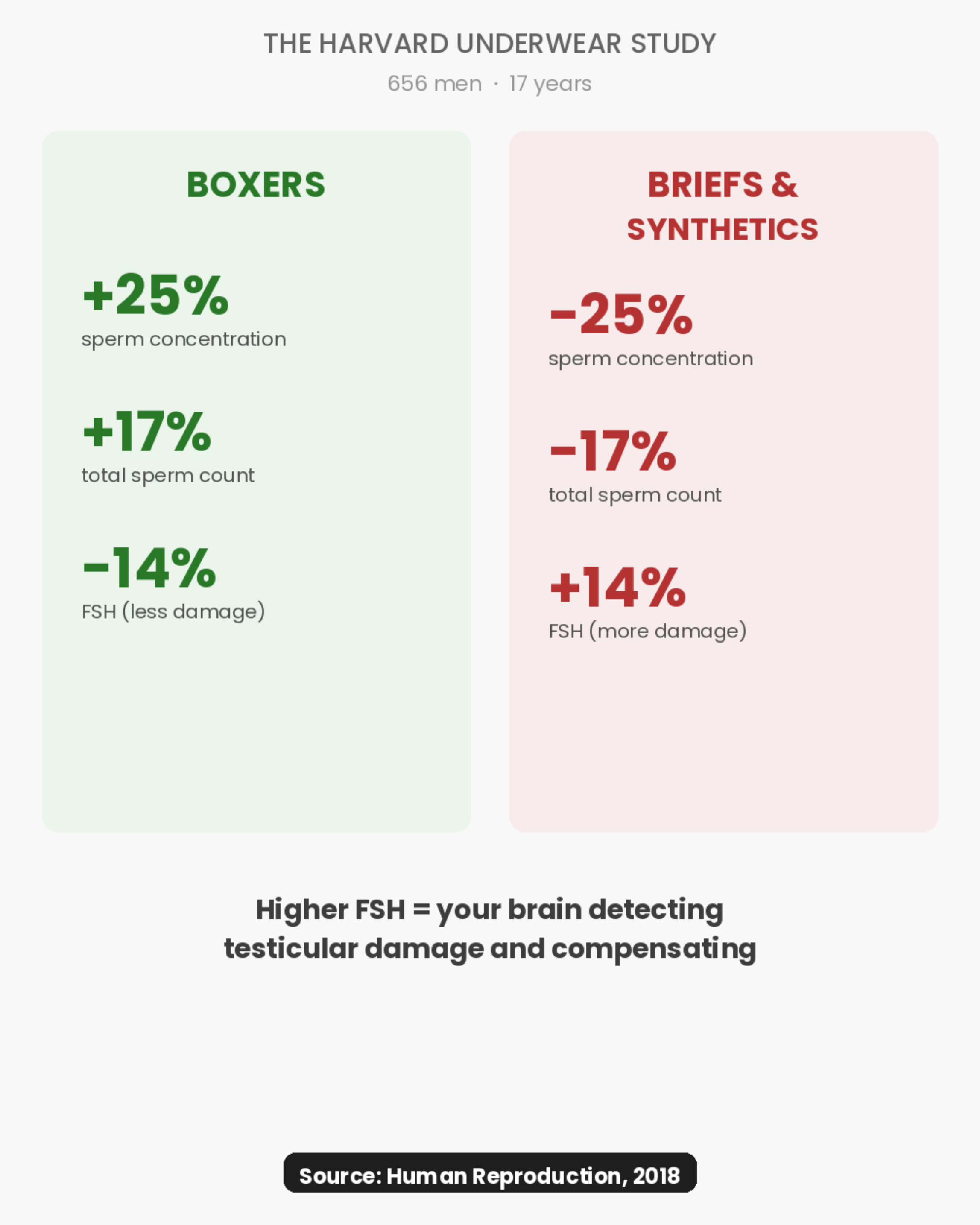
A 2018 study from Harvard T.H. Chan School of Public Health provides one of the clearest explanations. Researchers analyzed 656 men over a 17-year period and found that men who primarily wore boxers had 25% higher sperm concentration, 17% higher total sperm count, and 14% lower follicle-stimulating hormone (FSH) than men who wore tighter underwear.
The FSH finding is the one that matters most. FSH is the hormone the brain releases when it detects that the testes are underperforming. Lower FSH in boxer-wearers means their reproductive systems were functioning normally. Higher FSH in brief and synthetic underwear wearers means the brain was detecting testicular damage and trying to compensate. Your body has a built-in alarm system for this - and for millions of men, it is already going off.
And fit is only part of the equation. Scrotal skin is the most permeable skin on the male body - chemicals placed on the scrotum are absorbed at rates far exceeding any other body site. Synthetic underwear puts polyester, nylon, and spandex directly against this tissue for 16 or more hours a day. These fabrics shed microplastic fibers with every movement, leach BPA and phthalates through sweat, and generate measurable electrostatic charges against reproductive organs.
The timing is hard to ignore. Global polyester production has surged since 2000 - the same inflection point where the sperm decline accelerated. The average pair of underwear sold today contains synthetic fibers. What sits against the most absorptive skin on your body, every day, for the majority of your life, is not a minor detail. The 656 men in the Harvard study proved that. The question is what you do with that information.





One email/blog, every Friday. Subscribe below.