
Polyester was tested as birth control. It worked.

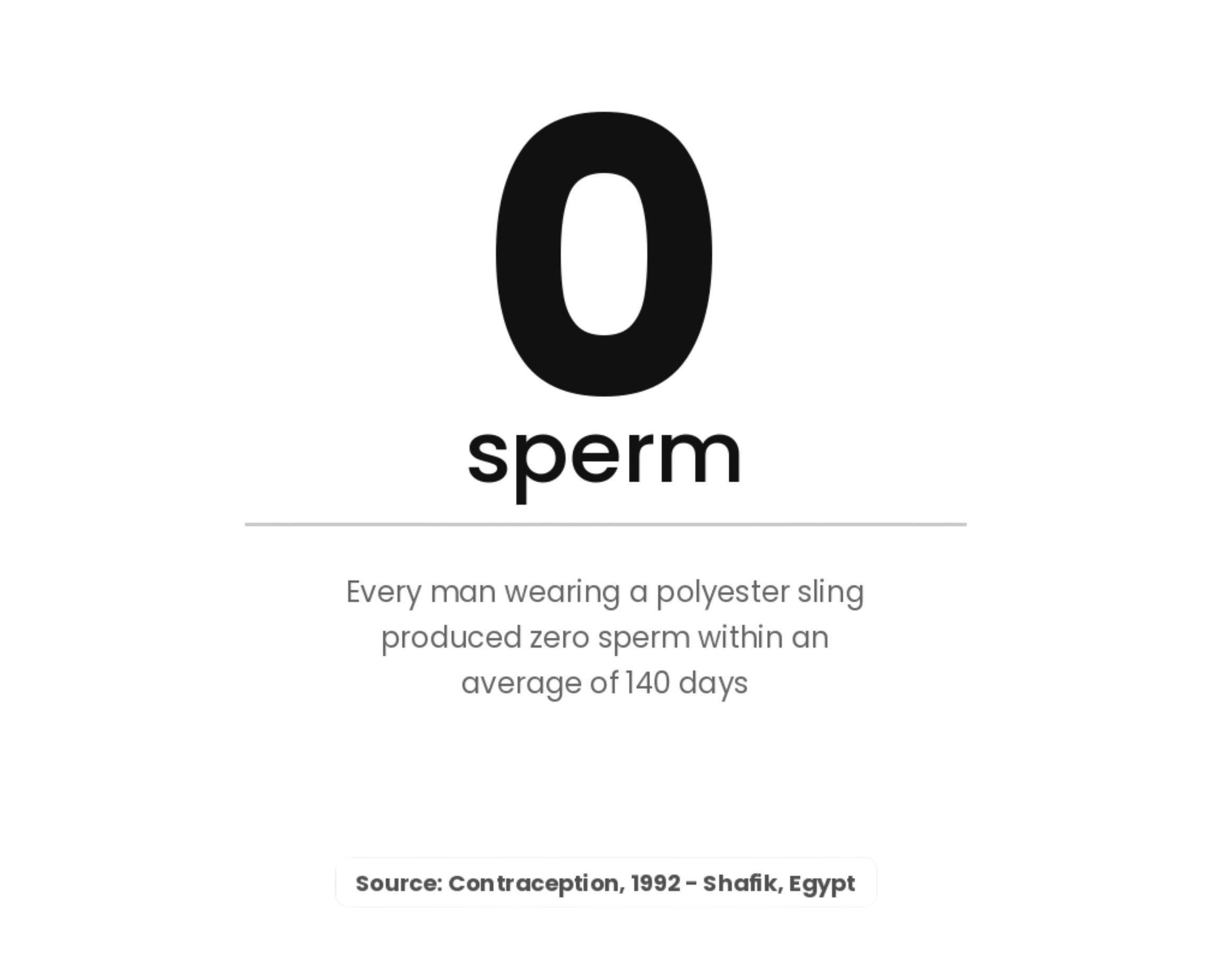
In 1992, Egyptian surgeon Ahmed Shafik published a study in the journal Contraception that most men have never heard of. He fitted 14 healthy men with a polyester scrotal sling and monitored their sperm for 12 months.
Within an average of 140 days, every single participant produced zero sperm. Not reduced. Zero. The effect was so complete and so consistent that Shafik proposed polyester as a new form of reversible male contraception.
The mechanism wasn't just heat. In a companion study, Shafik measured the electrical activity different fabrics generate against the skin of the scrotum. Polyester created significant electrostatic fields across the reproductive organs. Cotton and wool generated virtually none. His conclusion: polyester produces a constant low-level electrical charge against the most sensitive tissue in the male body.
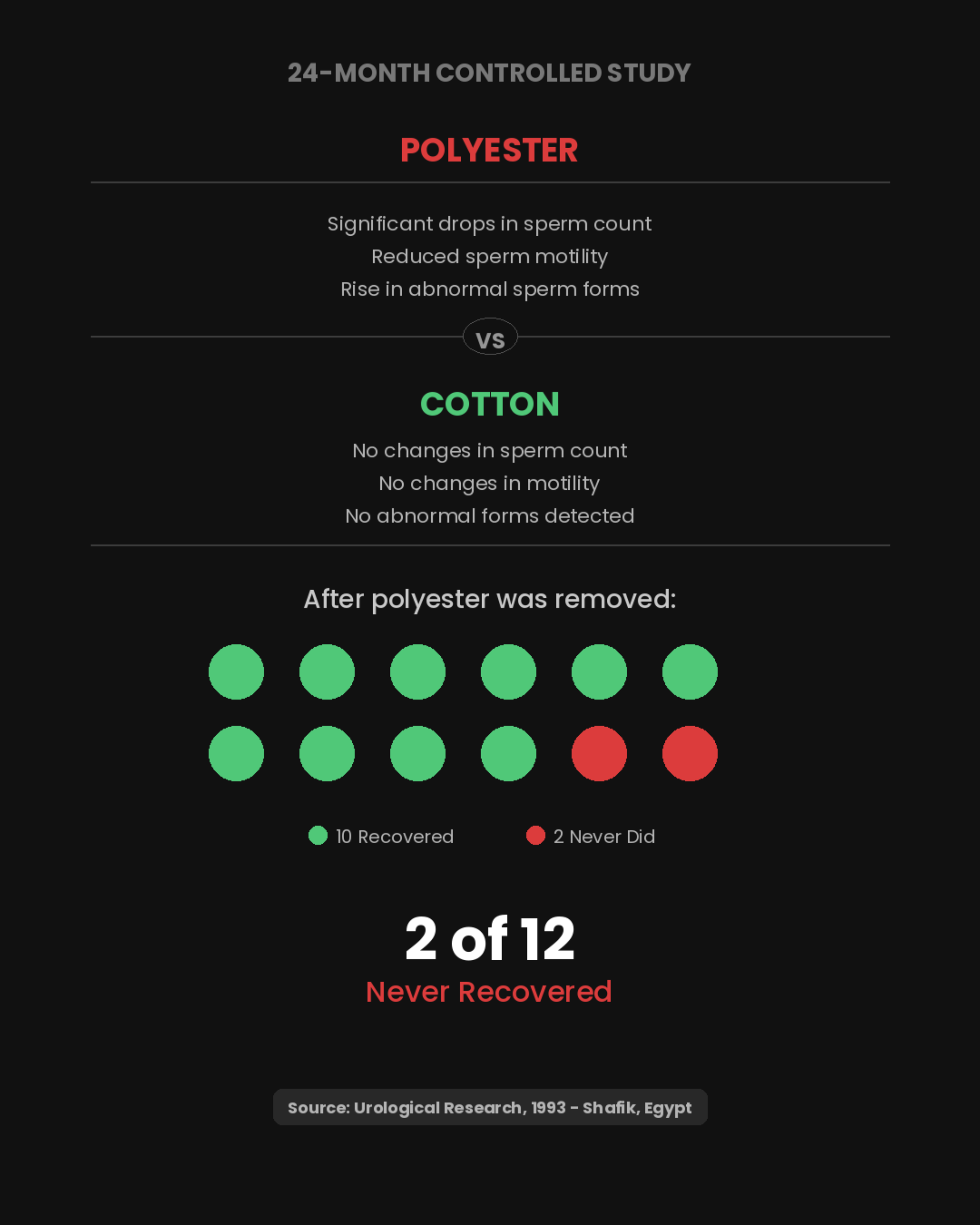
A controlled animal study published in Urological Research (1993) backed this up. Dogs wearing loose-fitting polyester underwear for 24 months showed significant drops in sperm count and motility, with a rise in abnormal sperm forms. Dogs wearing cotton showed no changes at all. After the polyester was removed, 10 of 12 dogs recovered normal function. Two never did.
The good news from Shafik's human study: all 14 men recovered their sperm after removing the polyester, and the five couples who wanted to conceive did. But the speed and completeness of the suppression raises a question most men have never considered - if polyester was effective enough to be proposed as contraception, what is it doing at a lower dose, every day, in the underwear you already own?
And it's not just the fabric structure. Recent testing by the Center for Environmental Health found BPA - a synthetic estrogen - at up to 22 times California's legal safety limit in polyester-spandex clothing. BPA absorbs directly through skin, especially when you sweat. A 2024 review of over 120 studies confirmed widespread phthalate contamination in synthetic textiles, with strong links to decreased testosterone and impaired sperm quality.





One email/blog, every Friday. Subscribe below.